Wednesday, May 30, 2018

Bruker (BRKR) Expected to Announce Quarterly Sales of $434.72 Million

Brokerages expect Bruker (NASDAQ:BRKR) to report sales of $434.72 million for the current quarter, Zacks Investment Research reports. Six analysts have issued estimates for Bruker’s earnings, with estimates ranging from $427.50 million to $444.00 million. Bruker posted sales of $414.90 million in the same quarter last year, which suggests a positive year-over-year growth rate of 4.8%. The firm is scheduled to issue its next quarterly earnings report on Thursday, August 2nd.

On average, analysts expect that Bruker will report full-year sales of $1.89 billion for the current year, with estimates ranging from $1.89 billion to $1.90 billion. For the next financial year, analysts forecast that the company will report sales of $1.96 billion per share, with estimates ranging from $1.95 billion to $1.98 billion. Zacks’ sales calculations are an average based on a survey of research analysts that that provide coverage for Bruker.

Get Bruker alerts:

Bruker (NASDAQ:BRKR) last released its earnings results on Thursday, May 3rd. The medical research company reported $0.24 earnings per share for the quarter, beating the Zacks’ consensus estimate of $0.22 by $0.02. Bruker had a net margin of 4.63% and a return on equity of 27.04%. The firm had revenue of $431.70 million during the quarter, compared to the consensus estimate of $419.25 million. During the same period in the prior year, the firm earned $0.19 EPS. The company’s revenue was up 12.2% compared to the same quarter last year.

BRKR has been the subject of several analyst reports. Morgan Stanley cut their price objective on shares of Bruker from $32.00 to $31.00 and set an “equal weight” rating for the company in a report on Wednesday, April 11th. BidaskClub downgraded shares of Bruker from a “buy” rating to a “hold” rating in a report on Saturday, February 10th. Leerink Swann raised their price objective on shares of Bruker from $32.00 to $34.00 and gave the stock a “market perform” rating in a report on Friday, February 9th. Bank of America cut their price objective on shares of Bruker from $37.00 to $34.00 and set a “neutral” rating for the company in a report on Friday, May 4th. Finally, Zacks Investment Research upgraded shares of Bruker from a “hold” rating to a “buy” rating and set a $34.00 target price on the stock in a research note on Tuesday, May 8th. Two equities research analysts have rated the stock with a sell rating, eight have given a hold rating and three have issued a buy rating to the company’s stock. The company presently has a consensus rating of “Hold” and an average price target of $32.91.

Bruker traded down $0.27, hitting $30.11, on Friday, according to MarketBeat Ratings. The company’s stock had a trading volume of 13,993 shares, compared to its average volume of 629,457. The company has a market cap of $4.74 billion, a PE ratio of 24.88, a price-to-earnings-growth ratio of 2.00 and a beta of 1.14. Bruker has a 12 month low of $26.76 and a 12 month high of $36.53. The company has a current ratio of 2.22, a quick ratio of 1.29 and a debt-to-equity ratio of 0.26.

The business also recently disclosed a quarterly dividend, which will be paid on Friday, June 22nd. Stockholders of record on Monday, June 4th will be given a dividend of $0.04 per share. This represents a $0.16 annualized dividend and a dividend yield of 0.53%. The ex-dividend date is Friday, June 1st. Bruker’s dividend payout ratio (DPR) is currently 13.22%.

A number of large investors have recently modified their holdings of the stock. BlackRock Inc. raised its position in Bruker by 1.8% in the 1st quarter. BlackRock Inc. now owns 5,267,689 shares of the medical research company’s stock worth $157,609,000 after purchasing an additional 93,829 shares during the period. Russell Investments Group Ltd. raised its position in Bruker by 1.3% in the 1st quarter. Russell Investments Group Ltd. now owns 1,483,860 shares of the medical research company’s stock worth $44,397,000 after purchasing an additional 19,226 shares during the period. Boston Partners raised its position in Bruker by 2.7% in the 1st quarter. Boston Partners now owns 1,297,471 shares of the medical research company’s stock worth $38,821,000 after purchasing an additional 34,578 shares during the period. Geode Capital Management LLC raised its position in Bruker by 2.5% in the 4th quarter. Geode Capital Management LLC now owns 1,294,131 shares of the medical research company’s stock worth $44,414,000 after purchasing an additional 31,742 shares during the period. Finally, Dimensional Fund Advisors LP raised its position in Bruker by 1.9% in the 1st quarter. Dimensional Fund Advisors LP now owns 958,525 shares of the medical research company’s stock worth $28,679,000 after purchasing an additional 17,812 shares during the period. Institutional investors own 65.55% of the company’s stock.

About Bruker

Bruker Corporation manufactures and distributes scientific instruments, and analytical and diagnostic solutions in the United States, Europe, the Asia Pacific, and internationally. The company operates in two segments, Bruker Scientific Instruments, and Bruker Energy & Supercon Technologies. It offers life science tools based on magnetic resonance technology; life science mass spectrometry and ion mobility spectrometry systems; infrared spectroscopy and radiological/nuclear detectors for chemical, biological, radiological, nuclear, and explosive detection in emergency response, homeland security, and defense applications; and research, analytical, and process analysis instruments and solutions based on infrared and Raman molecular spectroscopy technologies.

Get a free copy of the Zacks research report on Bruker (BRKR)

For more information about research offerings from Zacks Investment Research, visit Zacks.com

Earnings History and Estimates for Bruker (NASDAQ:BRKR)

Sunday, May 27, 2018

$206.36 Million in Sales Expected for BlackBerry Ltd (BB) This Quarter

Equities analysts expect BlackBerry Ltd (NYSE:BB) to report $206.36 million in sales for the current quarter, according to Zacks. Two analysts have issued estimates for BlackBerry’s earnings. The lowest sales estimate is $200.72 million and the highest is $212.00 million. BlackBerry reported sales of $244.00 million during the same quarter last year, which would suggest a negative year over year growth rate of 15.4%. The company is expected to report its next earnings report on Friday, June 22nd.

According to Zacks, analysts expect that BlackBerry will report full-year sales of $880.29 million for the current year, with estimates ranging from $856.14 million to $894.00 million. For the next fiscal year, analysts forecast that the business will report sales of $940.27 million per share, with estimates ranging from $922.78 million to $953.00 million. Zacks Investment Research’s sales averages are a mean average based on a survey of analysts that cover BlackBerry.

Get BlackBerry alerts:

BlackBerry (NYSE:BB) last released its quarterly earnings data on Wednesday, March 28th. The company reported $0.03 EPS for the quarter, topping analysts’ consensus estimates of ($0.03) by $0.06. The firm had revenue of $239.00 million during the quarter, compared to the consensus estimate of $217.88 million. BlackBerry had a net margin of 43.46% and a return on equity of 3.70%. The business’s quarterly revenue was down 16.4% on a year-over-year basis.

BB has been the topic of a number of recent research reports. Vetr upgraded BlackBerry from a “sell” rating to a “hold” rating and set a $10.20 target price on the stock in a research note on Monday, April 9th. Canaccord Genuity reiterated a “hold” rating and issued a $11.00 target price on shares of BlackBerry in a research note on Thursday, March 29th. Raymond James reiterated a “market perform” rating and issued a $11.00 target price on shares of BlackBerry in a research note on Thursday, March 29th. MKM Partners raised their target price on BlackBerry and gave the company a “neutral” rating in a research note on Thursday, March 29th. Finally, Zacks Investment Research upgraded BlackBerry from a “hold” rating to a “strong-buy” rating and set a $12.00 target price on the stock in a research note on Tuesday, April 3rd. Four investment analysts have rated the stock with a sell rating, ten have given a hold rating, four have issued a buy rating and one has issued a strong buy rating to the stock. The stock currently has a consensus rating of “Hold” and an average price target of $10.80.

Several hedge funds and other institutional investors have recently modified their holdings of the stock. Iridian Asset Management LLC CT bought a new stake in shares of BlackBerry during the first quarter valued at about $165,353,000. Ontario Teachers Pension Plan Board bought a new stake in shares of BlackBerry during the first quarter valued at about $119,413,000. Royal Bank of Canada bought a new stake in shares of BlackBerry during the first quarter valued at about $80,818,000. CIBC World Markets Inc. bought a new stake in shares of BlackBerry during the first quarter valued at about $67,346,000. Finally, First Eagle Investment Management LLC bought a new stake in shares of BlackBerry during the first quarter valued at about $54,613,000. Institutional investors and hedge funds own 57.58% of the company’s stock.

BlackBerry stock traded up $0.18 during mid-day trading on Tuesday, reaching $11.75. The company’s stock had a trading volume of 2,418,500 shares, compared to its average volume of 5,557,430. The company has a market cap of $6.23 billion, a PE ratio of 235.00 and a beta of 1.10. The company has a debt-to-equity ratio of 0.31, a current ratio of 5.49 and a quick ratio of 5.48. BlackBerry has a twelve month low of $8.47 and a twelve month high of $14.55.

About BlackBerry

BlackBerry Limited operates as an enterprise software and services company focused on securing and managing endpoints in the Internet of Things. It offers BlackBerry Enterprise Mobility Suite, which combines and integrates mobile security, management, productivity, and collaboration solutions, such as BlackBerry UEM, BlackBerry Dynamics, and BlackBerry Workspaces; BlackBerry AtHoc, a secure and networked crisis communications solution; SecuSUITE for Government, a voice encryption software solution; BlackBerry Enterprise Consulting and BlackBerry Cybersecurity Consulting; and BBM Enterprise, an enterprise-grade secure instant messaging solution, as well as Communications Platform as a Service.

Get a free copy of the Zacks research report on BlackBerry (BB)

For more information about research offerings from Zacks Investment Research, visit Zacks.com
Earnings History and Estimates for BlackBerry (NYSE:BB)

Saturday, May 26, 2018

Reader Inquiry: Could Protagonist Therapeutics Rebound In The Near Term?

Shares of Protagonist Therapeutics (PTGX) have lost over two-thirds of their value year to date. The stock popped up on my radar after noticing several green flags, including institutional positioning and a key executive hire.

Chart

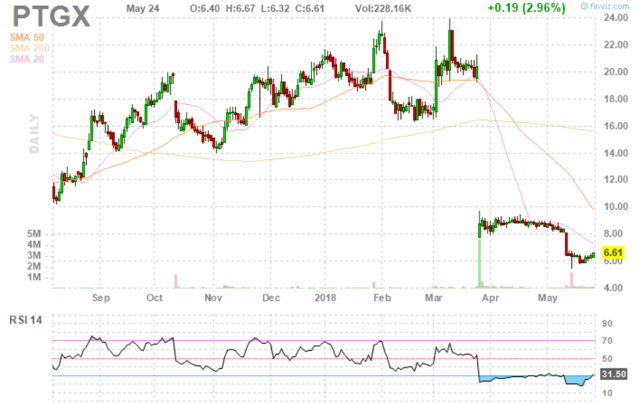
Figure 1: PTGX daily advanced chart (source: Finviz)

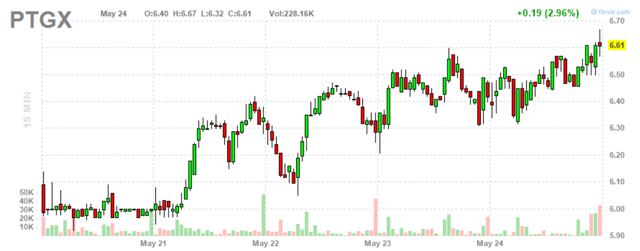
Figure 2: PTGX 15-minute chart (source: Finviz)

When looking at charts, clarity often comes from taking a look at distinct time frames in order to determine important technical levels and get a feel for what's going on. In the first chart (daily advanced), we can see the huge gap down in March after negative clinical news was announced. In the second chart (15-minute), we can see the makings of a nice rebound underway with the stock likely to rebound at least to where it originally was above the $8 level.

Reader Inquiry

In the marketplace service ROTY (Runners of the Year), we search for stocks that are attractive across multiple time frames with potential for high percentage upside within the near to medium term.

Late last week in ROTY, I published an update piece on an under the radar potential ASCO winner. A few days ago, in the model account, we added two key positions with catalysts coming up in the second half of the year.

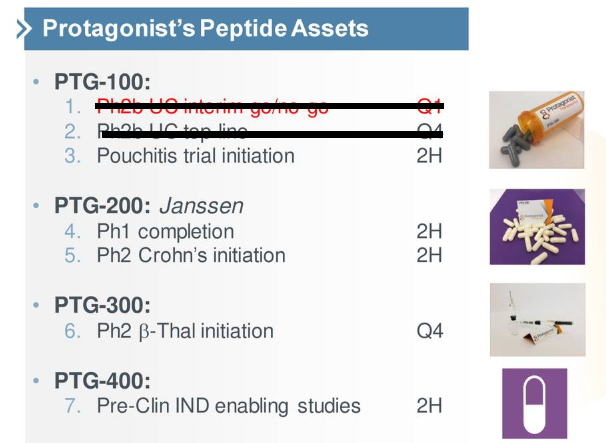
Figure 3: Pipeline (source: corporate website)

In the case of Protagonist Therapeutics, in ROTY Live Chat I pointed out several green flags to members yesterday. My objective now is to find out whether this one could rebound significantly in the near term and if it can potentially become our newest ROTY Contender.

Recent Developments

The stock price plunged in late March after the company announced disappointing news for their lead asset PTG-100, an oral GI-restricted alpha-4-beta-7 integrin antagonist peptide. In the phase 2b PROPEL trial, PTG-100 was being evaluated for use in patients with moderate to severe ulcerative colitis.

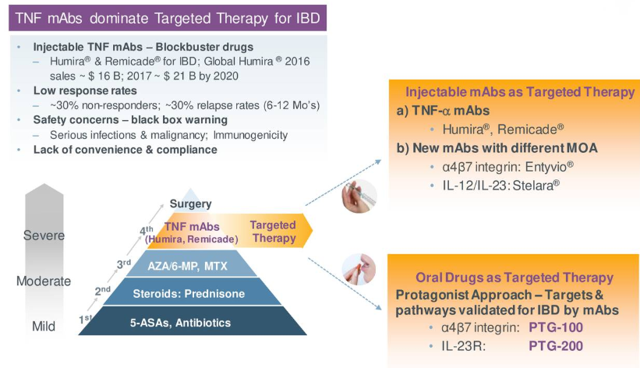
This was a potentially lucrative indication, a clinically validated target (multi-billion-dollar market opportunity) where an oral peptide would be a welcome alternative to injectable monoclonal antibodies. Treatments such as REMICADE and HUMIRA dominate targeted therapy for the IBD market with sales set to hit $21 billion by 2020. Unfortunately, setbacks such as low response rates, safety concerns, and lack of convenience represent major obstacles for such treatments. On paper, an investment in the company made sense, as their peptides held promise to address those obstacles and potentially transform the market by introducing targeted therapy to patients with mild-to-moderate disease and potentially being combined with other oral agents.

Figure 4: Blockbuster market opportunity snapshot (source: corporate presentation)

Unfortunately, the company announced discontinuation of the PROPEL study following an interim analysis by an independent Data Monitoring Committee of unblinded efficacy and safety data for the first 65 patients out of the 240 total the company wished to enroll. The DMC decided the trial wasn't worth continuing based on analysis of the primary endpoint of clinical remission. Importantly, there were no safety issues noted. However, a usually high placebo response was surprising.

As a result, the company also decided to postpone their decision concerning initiation of the phase 2/3 study in chronic pouchitis until after a full review of the interim data from the PROPEL study. Said review should be finished up in the third quarter.

If they do by chance decide to go ahead with the late-stage study, chronic pouchitis represents an attractive rare disease indication with around 20,000 patients in the United States and as many in Europe.

In mid-May, the company announced clinical and preclinical abstracts for PTG-300, their injectable hepcidin mimetic being evaluated for treatment of anemia and iron overload in rare blood disorders, had been accepted for oral presentation at the 23rd Congress of the European Hematology Association. The meeting takes place June 14th through the 17th and perhaps this catalyst could help the stock bounce back in the near term.

On May 24th, I came across two major green flags - one was the appointment of Samuel Saks, M.D., as Chief Development Officer. He will be in charge of the company's R&D efforts. It merits pointing out that prior he served in the same role at Auspex Pharmaceuticals until it was acquired by Teva Pharmaceuticals (TEVA) for $3.5 billion. He also was co-founder of Jazz Pharmaceuticals (JAZZ). Long-time ROTY readers will recall that key executive hirings are an indicator we keep close tabs on.

The news also just came out that Biotechnology Value Fund has acquired a 6.9% stake in the company (or rather raised their stake considerably). Interest by key institutional players is another green flag we look out for.

Other Information

For the first quarter of 2018, the company reported cash and equivalents of $140.5 million, meaning their once promising platform is being valued at next to nothing currently. Management is guiding for an operational runway through 2019. Net loss for the period came in lower at $7.7 million while R&D expenses increased to $15.4 million. License and collaboration revenue totaled $10.8 million (revenue from activities performed under the Janssen Collaboration Agreement).

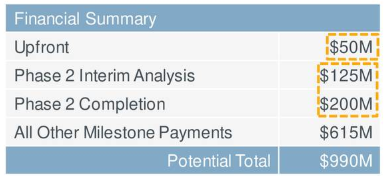
Speaking of which, the Janssen deal inked in May of last year merits highlighting. The collaboration is for co-development and commercialization of PTG-200, Protagonist's first-in-class, oral peptide IL-23 receptor antagonist. Keep in mind that Johnson & Johnson (JNJ) participated prior in a Series B financing for the smaller firm. Terms were attractive, with a $50 million upfront payment and milestones of up to $940 million (including significant development milestones for completion of the phase 2a/phase 2b study in Crohn's disease if Jansen chooses to keep its license after each event). Protagonist also is due double-digit tiered royalties on net product sales, later on, should they make it to approval.

Figure 4: Milestone breakdown from JNJ partnership (source: corporate presentation)

Dosing for all cohorts has been finished up in the phase 1 study in normal healthy volunteers (single-ascending and multiple-ascending doses). In the second half of the year, an IND filing in the US should pave the way for a global phase 2 study in Crohn's disease.

As for PTG-300 mentioned further above, an IND filing should be submitted in the third quarter to allow for initiation of a phase 2 study in beta-thalassemia patients in the fourth quarter. Later on, the company plans to explore other indications including treatment of anemia and transfusion-dependence in myelodysplastic syndromes and exaggerated erythropoiesis in polycythemia vera.

As for institutional investors of note, it's worth noting that EcoR1 Capital owns a new stake of over 1 million shares as well.

Final Thoughts

I'd like to close by referring back to BMO's analyst rating from early March, in which they placed an Outperform rating on shares and a $42 price target. The analyst stated the following (my emphasis in bold):

Low risk pipeline is quickly maturing with an interim analysis (futility) of the Phase 2b UC trial of PTG-100 later this month and final data in 4Q18. In addition, they expect advancement of PTG-200 into a Phase 2 Crohn's disease trial and start of PTG-300 trials in beta thalassemia in 2H18.

This is not to point fingers - I have my share of losers as well. It's to remind readers of two things, first that biotech is a minefield and the unexpected will happen from time to time. All we can do is manage risk the best we possibly can, so we'll be able to recover from such situations.

Secondly, other value drivers mentioned in that thesis are still intact for the latter two assets.

Perhaps after the steep decline, the present share price is an attractive entry point, considering the firm's cash position and insanely low valuation. In the near term, catalysts mentioned above could help to turn the situation around.

As for risks, there's always the possibility that the firm continues to burn cash without achieving success, resulting in further dilution down the road or worse. Nixing their lead program is possible, as is disappointing data and clinical setbacks (including delays) for their latter two programs or also the possibility of JNJ opting out.

I won't be adding this one to the ROTY Contenders List currently, as it merits more digging and I don't feel I have an advantage yet. That said, I look forward to coming catalysts and will continue to reevaluate. As stated before, the hiring of a high-profile executive and recent institutional positioning are two green flags to make this one worth following.

Keep in mind that when a stock is selected for ROTY, the corresponding article appears only to current subscribers. Also, for the purposes of due diligence, subscribers are able to access all of my archived work (getting around the 10-day paywall).

Disclaimer: Commentary presented is NOT individualized investment advice. Opinions offered here are NOT personalized recommendations. Readers are expected to do their own due diligence or consult an investment professional if needed prior to making trades. Strategies discussed should not be mistaken for recommendations, and past performance may not be indicative of future results. Although I do my best to present factual research, I do not in any way guarantee the accuracy of the information I post. I reserve the right to make investment decisions on behalf of myself and affiliates regarding any security without notification except where it is required by law. Keep in mind that any opinion or position disclosed on this platform is subject to change at any moment as the thesis evolves. Investing in common stock can result in partial or total loss of capital. In other words, readers are expected to form their own trading plan, do their own research, and take responsibility for their own actions. If they are not able or willing to do so, better to buy index funds or find a thoroughly vetted fee-only financial advisor to handle your account.

Disclosure: I/we have no positions in any stocks mentioned, and no plans to initiate any positions within the next 72 hours.

I wrote this article myself, and it expresses my own opinions. I am not receiving compensation for it (other than from Seeking Alpha). I have no business relationship with any company whose stock is mentioned in this article.

Thursday, May 24, 2018

Puerto Rico's Surplus to Drop by $660 Million in Revised Plan

Puerto Rico’s forecast for its budget surplus over the next six years will be cut by $660 million because of the revisions to the plan for pulling the bankrupt island out of a decade-long recession.

The federal board and Governor Ricardo Rossello Sunday reached an agreement to scale back proposed labor reforms, such as ending Christmas bonuses, that the panel was pushing for in the island’s multi-year fiscal plan. That will cost Puerto Rico $660 million through fiscal 2023 and reduce its surplus over the next 30 years to $35 billion from $39 billion, Natalie Jaresko, the board’s executive director, said in a call Wednesday with reporters.

Jaresko has said the agreement with the governor was necessary to push ahead with reforms to increase business investment on the island and make Puerto Rico more competitive.

“This is all being done specifically focused on ensuring that structural reforms have less risk of implementation, there’s more certainty of them and the economic future of Puerto Rico and its financial capacity,” Jaresko said.

While the smaller surplus means less money to repay bondholders, the agreement prevented a legal fight between the oversight board and the island that could have delayed any recovery. How much of the $74 billion of debt is repaid will depend on the outcome of negotiations in bankruptcy court.

While it’s not certain that all of Puerto Rico’s surplus will go to bondholders, the amount does show the island’s capacity to repay, Jaresko said.

“It doesn’t mean that every dollar will go into any particular use but it is what defines to a large extent what is possible,” Jaresko said.

LISTEN TO ARTICLE 1:36 Share Share on Facebook Post to Twitter Send as an Email Print

Wednesday, May 23, 2018

CDK Global (CDK) Getting Somewhat Favorable Press Coverage, Report Finds

Media stories about CDK Global (NASDAQ:CDK) have trended somewhat positive on Tuesday, Accern Sentiment Analysis reports. The research firm identifies positive and negative press coverage by analyzing more than 20 million news and blog sources in real time. Accern ranks coverage of companies on a scale of negative one to positive one, with scores nearest to one being the most favorable. CDK Global earned a news sentiment score of 0.09 on Accern’s scale. Accern also assigned media coverage about the software maker an impact score of 46.9002952818769 out of 100, indicating that recent press coverage is somewhat unlikely to have an effect on the company’s share price in the near future.

These are some of the headlines that may have effected Accern Sentiment’s analysis:

Get CDK Global alerts: CDK announces Connected Workshop concept (am-online.com) CDK Global announces new Connected Workshop concept (cardealermagazine.co.uk) Judge: Car dealer software companies can’t delete antitrust claims over monopolization of car dealer data (cookcountyrecord.com) CDK Global (CDK) vs. Ritchie Bros. Auctioneers (RBA) Head-To-Head Survey (americanbankingnews.com) $578.44 Million in Sales Expected for CDK Global (CDK) This Quarter (americanbankingnews.com)

CDK has been the subject of a number of research analyst reports. Barrington Research restated a “hold” rating on shares of CDK Global in a research note on Monday, March 26th. BidaskClub lowered shares of CDK Global from a “sell” rating to a “strong sell” rating in a research note on Wednesday, February 21st. Zacks Investment Research lowered shares of CDK Global from a “strong-buy” rating to a “hold” rating in a research note on Tuesday, April 3rd. Morgan Stanley lifted their price target on shares of CDK Global from $76.00 to $77.00 and gave the stock an “equal weight” rating in a research note on Wednesday, January 31st. Finally, Wells Fargo restated an “outperform” rating and issued a $80.00 price target (up previously from $75.00) on shares of CDK Global in a research note on Wednesday, January 31st. Two investment analysts have rated the stock with a sell rating, three have given a hold rating and two have given a buy rating to the company. The company currently has an average rating of “Hold” and a consensus price target of $74.80.

Shares of CDK Global traded down $0.17, hitting $63.26, during midday trading on Tuesday, according to MarketBeat Ratings. 759,500 shares of the stock traded hands, compared to its average volume of 1,166,587. CDK Global has a 1-year low of $59.33 and a 1-year high of $76.04. The company has a market cap of $8.42 billion, a price-to-earnings ratio of 26.03, a price-to-earnings-growth ratio of 1.98 and a beta of 0.77. The company has a debt-to-equity ratio of -9.65, a quick ratio of 1.80 and a current ratio of 1.80.

CDK Global (NASDAQ:CDK) last announced its quarterly earnings results on Thursday, April 26th. The software maker reported $0.85 earnings per share (EPS) for the quarter, beating the consensus estimate of $0.84 by $0.01. CDK Global had a net margin of 14.99% and a negative return on equity of 361.64%. The company had revenue of $576.60 million during the quarter, compared to the consensus estimate of $578.11 million. During the same quarter in the previous year, the company posted $0.65 earnings per share. The company’s revenue for the quarter was up 3.6% compared to the same quarter last year. analysts predict that CDK Global will post 3.23 EPS for the current year.

In related news, EVP Scott L. Mathews sold 5,514 shares of the company’s stock in a transaction dated Wednesday, February 21st. The shares were sold at an average price of $68.91, for a total value of $379,969.74. Following the completion of the sale, the executive vice president now owns 48,520 shares of the company’s stock, valued at $3,343,513.20. The transaction was disclosed in a filing with the Securities & Exchange Commission, which is accessible through the SEC website. Also, insider Rajiv K. Amar sold 1,968 shares of the company’s stock in a transaction dated Thursday, February 22nd. The stock was sold at an average price of $69.85, for a total transaction of $137,464.80. Following the completion of the sale, the insider now directly owns 11,072 shares of the company’s stock, valued at approximately $773,379.20. The disclosure for this sale can be found here. Corporate insiders own 0.39% of the company’s stock.

About CDK Global

CDK Global, Inc provides integrated information technology and digital marketing solutions to the automotive retail and other industries worldwide. The company operates through Retail Solutions North America, Advertising North America, and CDK International segments. It offers technology-based solutions, including automotive Website platforms; and advertising solutions comprising the management of digital advertising spend for original equipment manufacturers and automotive retailers.

Insider Buying and Selling by Quarter for CDK Global (NASDAQ:CDK)

Monday, May 21, 2018

How One Company Is Capitalizing On Cannabis Distillates' Surging Popularity

As Benzinga recently detailed, smoking is just one of many ways to consume cannabis. In fact, smoking is becoming less popular as other smokeless options continue to emerge. They include distillates, a kind of cannabis concentrate found in some vape pens or sold for use with dab rigs.

Much has been said about companies capitalizing on the smokeless cannabis consumption trend, but the focus is usually on the businesses making the actual distillates.

Little has been said about those “selling pickaxes,” those making the equipment needed to make the distillates in question. Benzinga reached out to Root Sciences, the largest cannabis distillery equipment maker in the United States and the producer of the Short Path Distillation system, which is used to make distillates containing tetrahydrocannabinol, cannabidiol and other cannabinoids.

How Short Path Distillation Works

How does Root Sciences’ distillation technology work and how is it different from others in the market?

The company’s equipment “rapidly puts the cannabis oil in its final stage,” with 60-percent THC potency and no impurities, CEO Nenad Yashruti told Benzinga.

“From the medical patient to the recreational consumer, concentrates of this purity, potency and consistency will be the cornerstone of future cannabis consumption,” Yashruti said in an interview with Dope Magazine in 2016.

Interestingly enough, this statement remains valid to date.

Related Link: Marijuana In College: Why Universities Are Offering Cannabis-Focused Classes (And Where You Can Find Them)

The Root Sciences Story

How did Root Sciences become a leader in the distillation equipment space?

Everything started in 2016, in Belfair, Washington.

“We had our sights set on ancillary parts of the business and knew we needed to be a practitioner first. We ended up building a state-of-the-art, first-of-its-kind facility that was featured in many industry publications and really established our management team as thought leaders in the industry,” Yashruti said in a conversation with Edibles Magazine.

In 2017, the company was using a short path, whipped film, molecular separation process, something other industries had been using for some time. Seeing an opportunity to build on the burgeoning market, Root Sciences stuck a deal with German equipment manufacturer VTA, a specialist in thermal process engineering.

“When we brought them out here [to our facility], they were impressed with the technology that we were using in all parts of cannabis,” Yashruti said. “They awarded us an exclusive distribution contract in North America for two years.”

The relationship exceeded expectations in just under six months, he said.

“We had so much success and became very close with a manufacturer that they extended the contract for a decade long and make it global. We are now the global exclusive distributor for VTA and the cannabis industry when it comes to purification plants.”

Root Sciences’ equipment now sells for more than $100,000 a set. “Our equipment is the most expensive, but it is by far better than anything on the market as it is being designed and updated continuously where other older technology systems have stagnated,” Yashruti said.

“Gone will be the days of making shatter or sugar concentrates that have to be individually weighed, packaged and processed,” Mr. Yashruti told Dope. “With distillate being in a liquid form, automation in the concentrate and edible market will be the clear winner. As more competitors pile into this industry, the lack of automation will be terminal.”

With the industry asking questions and market demand rising, Root Sciences' long strategy is paying off. Where it could go from here may only be limited by which markets open in the coming years. Stay tuned in for updates on this growing business.

Related Link:

Pot Stocks, ETFs, Top News And Data From The Cannabis Industry This Week 

Public domain photo via Wikimedia.

Sunday, May 20, 2018

Top 5 Canadian Stocks To Watch For 2018

tags:PBH,CNI,WFC,COP,ST,

Consolidation isn't coming in the Canadian cannabis industry -- it's already here.

The big story right now relates to the potential acquisition of MedReleaf (NASDAQOTH:MEDFF) by Aurora Cannabis (NASDAQOTH:ACBFF). There's no guarantee that a deal will be made, but the two companies announced that they were engaged in discussions.

Aurora is currently the second-largest Canadian marijuana grower by market cap, while MedReleaf fluctuates between being ranked No. 3 and No. 4. An acquisition of MedReleaf would enable Aurora to leapfrog over Canopy Growth (NASDAQOTH:TWMJF) to become the top marijuana stock on the market.

Should Aurora actually buy MedReleaf, there could be considerable pressure on Canopy to make an acquisition of its own. One obvious target to buy would be Aphria (NASDAQOTH:APHQF), which has roughly the same market cap as MedReleaf. But would this acquisition make sense for Canopy Growth? I think it could.��

Image source: Getty Images.

Top 5 Canadian Stocks To Watch For 2018: Prestige Brand Holdings Inc.(PBH)

Advisors' Opinion:
  • [By Ethan Ryder]

    Premium Brands (TSE:PBH) will be announcing its earnings results before the market opens on Tuesday, May 15th. Analysts expect the company to announce earnings of C$0.71 per share for the quarter.

  • [By Stephan Byrd]

    Premium Brands (TSE:PBH) had its target price increased by TD Securities from C$140.00 to C$145.00 in a research note published on Thursday. The firm currently has an action list buy rating on the stock.

  • [By Lisa Levin] Gainers Turtle Beach Corporation (NASDAQ: HEAR) surged 87.1 percent to $12.98 after the company reported Q1 results and raised its FY18 outlook. ARMO BioSciences, Inc. (NASDAQ: ARMO) shares jumped 66.8 percent to $49.735 after Eli Lilly and Company (NYSE: LLY) announced plans to acquire ARMO BioSciences for $50 per share. vTv Therapeutics Inc. (NASDAQ: VTVT) gained 34 percent to $2.2920 following announcement that the company will pre-specify new subgroup with the FDA and report Phase 3 Part B results in June. Prestige Brands Holdings, Inc. (NYSE: PBH) climbed 22.3 percent to $34.84 after the company posted upbeat Q4 earnings. Depomed, Inc. (NASDAQ: DEPO) shares jumped 22.2 percent to $7.28 following better-than-expected Q1 earnings. Everspin Technologies, Inc. (NASDAQ: MRAM) gained 19.8 percent to $8.89 after the company reported strong results for its first quarter. Luxfer Holdings PLC (NYSE: LXFR) surged 19.8 percent to $17.10 following Q1 results. Clean Energy Fuels Corp. (NASDAQ: CLNE) rose 18.3 percent to $2.26 after French company Total announced plans to acquire 25 percent stake in Clean Energy Fuels for $83.4 million. Intelligent Systems Corporation (NYSE: INS) gained 17 percent to $7.116. Green Dot Corporation (NYSE: GDOT) surged 15.3 percent to $73.00 after reporting upbeat Q1 earnings. The Chefs' Warehouse, Inc. (NASDAQ: CHEF) climbed 15 percent to $28.85. Chefs' Warehouse posted Q1 earnings of $0.03 per share on sales of $318.6 million. Westport Fuel Systems Inc. (NASDAQ: WPRT) rose 14.2 percent to $2.9701. Wright Medical Group N.V. (NASDAQ: WMGI) jumped 13.8 percent to $23.87 after reporting upbeat quarterly earnings. Diplomat Pharmacy, Inc. (NYSE: DPLO) gained 13.4 percent to $22.70. Diplomat named Brian Griffin as Chairman and CEO. Carvana Co. (NYSE: CVNA) shares rose 13 percent to $27.97 after reporting upbeat Q1 sales. Prothena Corporation plc (NASDAQ: PRTA) gained 12 percent to $15.19
  • [By Lisa Levin]

    On Thursday, the health care shares rose 1.02 percent. Meanwhile, top gainers in the sector included ARMO BioSciences, Inc. (NASDAQ: ARMO), up 67 percent, and Prestige Brands Holdings, Inc. (NYSE: PBH) up 28 percent.

Top 5 Canadian Stocks To Watch For 2018: Canadian National Railway Company(CNI)

Advisors' Opinion:
  • [By Paul Ausick]

    GE got some good news this past week with an order for 200 locomotives from Canadian National Railway Co. (NYSE: CNI). The locomotives will be built at GE’s plant in Fort Worth, Texas, and deliveries to the rail operator will begin next year. The balance of the locomotives will be delivered in 2019 and 2020.

  • [By Neha Chamaria]

    Canadian National Railway (NYSE:CNI) is facing a unique problem: too much demand that it can't seem to handle. Severe capacity shortages and delay in deliveries last quarter proved costly for the railroad, as evidenced by its just released first-quarter earnings report.

  • [By Shane Hupp]

    Get a free copy of the Zacks research report on Canadian National Railway (CNI)

    For more information about research offerings from Zacks Investment Research, visit Zacks.com

  • [By Motley Fool Staff]

    Canadian National Railway Co (NYSE:CNI)Q1 2018 Earnings Conference CallApril 23, 2018, 4:30 p.m. ET

    Contents: Prepared Remarks Questions and Answers Call Participants Prepared Remarks:

    Operator

  • [By Max Byerly]

    WARNING: “Q3 2018 Earnings Estimate for Canadian National Railway (CNI) Issued By Cormark” was first posted by Ticker Report and is owned by of Ticker Report. If you are reading this piece on another publication, it was copied illegally and reposted in violation of U.S. & international copyright & trademark law. The original version of this piece can be viewed at https://www.tickerreport.com/banking-finance/3350637/q3-2018-earnings-estimate-for-canadian-national-railway-cni-issued-by-cormark.html.

Top 5 Canadian Stocks To Watch For 2018: Wells Fargo & Company(WFC)

Advisors' Opinion:
  • [By Douglas A. McIntyre]


    U.S. sanctions of Wells Fargo & Co. (NYSE: WFC) may last longer than expected. According to The Wall Street Journal:

    Wells Fargo & Co. will remain constrained by a regulator-imposed limit on growth for longer than expected, its chief executive said Thursday, as the bank continues to address the ramifications of risk-management failures.

  • [By Matthew Frankel]

    It's been an eventful week in the financial markets. Wells Fargo's (NYSE:WFC) scandals are in the headlines (again), the two largest investment banks reported excellent earnings, and there's another data breach consumers should know about.

  • [By ]

    Wells Fargo & Co. (WFC) , the U.S. bank already reeling from sanctions by regulators over alleged customer abuses, faces additional penalties of as much as $1 billion to resolve allegations over matters including auto insurance and mortgage-sales practices.

  • [By ]

    JPMorgan Chase & Co. (JPM) , Citigroup Inc.  (C)  Wells Fargo & Co. (WFC)  and BlackRock Inc. (BLK) reported first-quarter earnings on Thursday and Friday. Here are five things the reports show about the economic impact of President Donald Trump's tax cuts and how the Federal Reserve's interest-rate hikes are affecting consumers.

  • [By Alexander Bird]

    Under the new law, the nation's corporate tax rate has been slashed from 35% to 21%, giving banks an immense tax break. Both JPMorgan Chase & Co. (NYSE: JPM) and Wells Fargo & Co. (NYSE: WFC) have estimated they will end up paying an effective tax rate of 19% in 2018, well below the corporate average.

Top 5 Canadian Stocks To Watch For 2018: ConocoPhillips(COP)

Advisors' Opinion:
  • [By Paul Ausick]

    Before markets open Friday, the two energy producers among the 30 Dow Jones industrial stocks will be reporting first-quarter results. Exxon Mobil Corp. (NYSE: XOM) and Chevron Corp. (NYSE: COP) are both expected to show higher revenues and profits, largely as a result of higher commodity prices. But there are other issues at play as well.

  • [By Matthew DiLallo]

    Oil prices have been on fire over the past year and recently topped $70 a barrel, which is the highest crude has been since late 2014. That rally in the oil market has helped fuel big-time gains in many oil stocks. Three that stand out are Anadarko Petroleum (NYSE:APC), Hess (NYSE:HES), and ConocoPhillips (NYSE:COP) because each has risen more than 20% this year. They might still have additional upside from here given that all three plan on spending billions of dollars to buy back more of their stock.

  • [By Zacks]

    Moreover, BP opened 100 retail sites in the country in 2017 and plans to open 1,400 more by 2021. The largest publicly traded oil company, ExxonMobil Corporation (NYSE: XOM) opened its gas stations in Mexico in December, while one of the world's biggest independent oil producers – ConocoPhillips (NYSE: COP) – showed interest in Mexico, post-reform.

  • [By Matthew DiLallo]

    ConocoPhillips (NYSE:COP) has worked hard to distinguish itself from other oil companies over the past few years by shifting its focus from growing production to increasing shareholder value. That led it on a path to shed high-cost assets so that it could slim down to a company that could thrive at lower oil prices.

  • [By Chris Lange]

    The number of ConocoPhillips (NYSE: COP) shares short rose to 24.44 million from the previous level of 23.91 million. Shares were trading at $64.80, within a 52-week range of $42.27 to $67.30.

Top 5 Canadian Stocks To Watch For 2018: Sensata Technologies Holding N.V.(ST)

Advisors' Opinion:
  • [By Lisa Levin] Companies Reporting Before The Bell United Technologies Corporation (NYSE: UTX) is estimated to report quarterly earnings at $1.51 per share on revenue of $14.62 billion. The Coca-Cola Company (NYSE: KO) is expected to report quarterly earnings at $0.46 per share on revenue of $7.31 billion. Caterpillar Inc. (NYSE: CAT) is projected to report quarterly earnings at $2.07 per share on revenue of $11.93 billion. Verizon Communications Inc. (NYSE: VZ) is expected to report quarterly earnings at $1.11 per share on revenue of $31.22 billion. Lockheed Martin Corporation (NYSE: LMT) is estimated to report quarterly earnings at $3.42 per share on revenue of $11.28 billion. The Sherwin-Williams Company (NYSE: SHW) is projected to report quarterly earnings at $3.15 per share on revenue of $3.94 billion. Biogen Inc. (NASDAQ: BIIB) is expected to report quarterly earnings at $5.92 per share on revenue of $3.15 billion. 3M Company (NYSE: MMM) is estimated to report quarterly earnings at $2.52 per share on revenue of $8.26 billion. JetBlue Airways Corporation (NASDAQ: JBLU) is projected to report quarterly earnings at $0.2 per share on revenue of $1.75 billion. Eli Lilly and Company (NYSE: LLY) is expected to report quarterly earnings at $1.13 per share on revenue of $5.49 billion. Harley-Davidson, Inc. (NYSE: HOG) is estimated to report quarterly earnings at $0.88 per share on revenue of $1.25 billion. Corning Incorporated (NYSE: GLW) is expected to report quarterly earnings at $0.3 per share on revenue of $2.50 billion. Centene Corporation (NYSE: CNC) is projected to report quarterly earnings at $1.88 per share on revenue of $13.28 billion. The Travelers Companies, Inc. (NYSE: TRV) is estimated to report quarterly earnings at $2.77 per share on revenue of $6.75 billion. Wipro Limited (NYSE: WIT) is expected to report quarterly earnings at $0.07 per share on revenue of $2.16 billion. PACCAR Inc (NASDAQ: PCAR) is projected to
  • [By Ethan Ryder]

    News coverage about Sensata Technologies (NYSE:ST) has trended somewhat positive recently, Accern Sentiment Analysis reports. The research firm ranks the sentiment of media coverage by monitoring more than 20 million blog and news sources. Accern ranks coverage of publicly-traded companies on a scale of negative one to one, with scores closest to one being the most favorable. Sensata Technologies earned a news sentiment score of 0.15 on Accern’s scale. Accern also assigned media headlines about the scientific and technical instruments company an impact score of 47.3141406855551 out of 100, meaning that recent media coverage is somewhat unlikely to have an effect on the company’s share price in the next few days.

  • [By Logan Wallace]

    Get a free copy of the Zacks research report on Sensata Technologies (ST)

    For more information about research offerings from Zacks Investment Research, visit Zacks.com

Saturday, May 19, 2018

Western Asset Premier Bond Fund (WEA) Hits New 52-Week High and Low After Dividend Announcement

Western Asset Premier Bond Fund (NYSE:WEA) hit a new 52-week high and low during mid-day trading on Thursday following a dividend announcement from the company. The stock traded as low as $12.63 and last traded at $12.63, with a volume of 12970 shares changing hands. The stock had previously closed at $12.63.

The newly announced dividend which will be paid on Tuesday, September 4th. Stockholders of record on Friday, August 24th will be paid a $0.065 dividend. The ex-dividend date is Thursday, August 23rd. This represents a $0.78 dividend on an annualized basis and a dividend yield of 6.18%.

Several institutional investors have recently modified their holdings of WEA. Northwestern Mutual Wealth Management Co. raised its stake in shares of Western Asset Premier Bond Fund by 20.8% in the 4th quarter. Northwestern Mutual Wealth Management Co. now owns 92,155 shares of the investment management company’s stock valued at $1,273,000 after purchasing an additional 15,873 shares in the last quarter. ProVise Management Group LLC grew its position in shares of Western Asset Premier Bond Fund by 3.7% during the 4th quarter. ProVise Management Group LLC now owns 211,582 shares of the investment management company’s stock valued at $2,922,000 after buying an additional 7,488 shares during the last quarter. Guggenheim Capital LLC grew its position in shares of Western Asset Premier Bond Fund by 15.6% during the 4th quarter. Guggenheim Capital LLC now owns 108,999 shares of the investment management company’s stock valued at $1,505,000 after buying an additional 14,711 shares during the last quarter. Ladenburg Thalmann Financial Services Inc. grew its position in shares of Western Asset Premier Bond Fund by 883.5% during the 4th quarter. Ladenburg Thalmann Financial Services Inc. now owns 48,435 shares of the investment management company’s stock valued at $669,000 after buying an additional 43,510 shares during the last quarter. Finally, LPL Financial LLC bought a new stake in shares of Western Asset Premier Bond Fund during the 4th quarter valued at about $199,000.

Western Asset Premier Bond Fund Company Profile

Western Asset Premier Bond Fund (the Fund) is a diversified, closed-end management investment company. The Fund’s investment objective is to provide current income and capital appreciation by investing in a portfolio of investment grade bonds. It may invest over 80% of its total managed assets in bonds, including corporate bonds, the Unites States Government and agency securities, and mortgage-related securities, and over 65% in bonds that are of investment grade quality.